
From Storm to Stream: Our Rain Garden Project
Protecting the Mukwonago River Together
The Mukwonago Community Library is excited to announce our rain garden project—a beautiful and meaningful collaboration with the Village of Mukwonago Public Works Department and Waukesha County Department of Parks and Land Use. This isn’t just about making our Library grounds more attractive (though it certainly will!). It’s about taking action to protect our beloved Mukwonago River, one raindrop at a time.
This three-year project started in May 2025 with two workshops open to the public. The north stormwater pond, measuring 1,400 feet by 10 feet, was planted with approximately 1,600 native Wisconsin plants. In future years, the south stormwater pond will be planted and community education will continue.
A True Community Partnership
This project showcases what’s possible when community organizations work together. The Village of Mukwonago has been a leader in stormwater management, implementing comprehensive programs that include:
- Regular inspection and maintenance of stormwater systems
- Construction site pollution controls
- Street sweeping and catch basin cleaning
- Public education initiatives
The Village uses native plants in several stormwater ponds and ditches throughout the community. Our garden contains dozens of beautiful flowers and carefullly arranged plants to showcase that rain gardens can be attractive and practical.
Waukesha County brings expertise in conservation and sustainable practices, helping communities throughout the region implement effective stormwater solutions.
Together, we’re addressing a significant environmental challenge: water running off roofs, roads, and driveways can increase stream flow by up to 500%, leading to flooding and erosion that harms aquatic habitats and water quality.
Join Us in Protecting Our Watershed
Every time you see our rain garden, remember that you’re looking at a small but powerful example of environmental stewardship in action. This living demonstration shows how simple, nature-based solutions can address complex environmental challenges while creating beauty in our community.
Whether you’re inspired to create your own rain garden, make more environmentally conscious choices in your daily life, or simply enjoy watching our native plants change through the seasons, you’re part of the solution. Together, we’re ensuring that the Mukwonago River continues to flow clean and clear for generations to come.
Learn more about how to create your own rain garden from the Wisconsin DNR.
Learn more about the Village of Mukwonago’s stormwater management.
Learn more about the latest stormwater workshops in Waukesha County.
FAQs
What exactly is a rain garden?
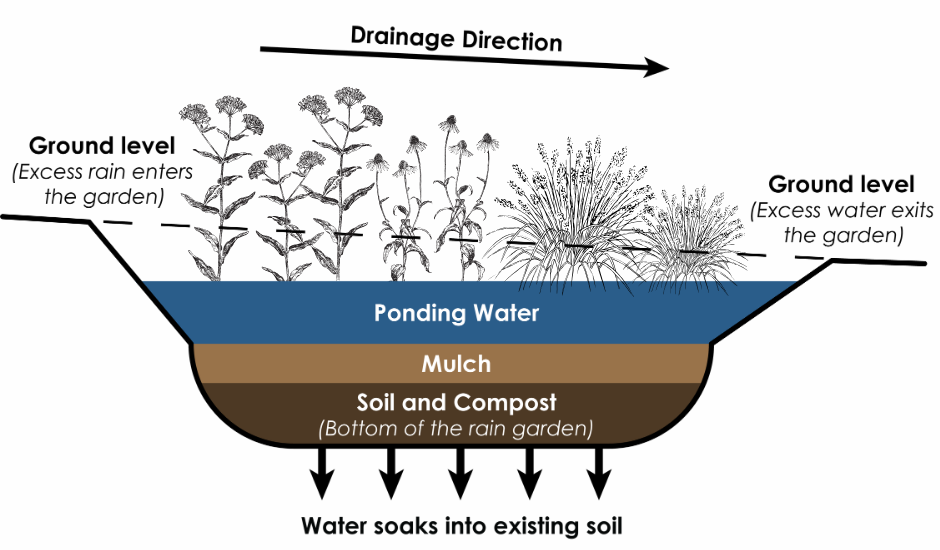
Think of a rain garden as nature’s own water filter. It’s a specially designed shallow garden that temporarily holds rainwater from roofs, driveways, and other hard surfaces, allowing it to slowly soak into the ground rather than rushing off into storm drains.
Our rain garden may look simple, but it’s working hard behind the scenes:
- Water collection: It captures rainwater runoff before it can carry pollutants downstream
- Natural filtering: As water soaks through the soil and plant roots, contaminants get trapped and filtered out
- Groundwater recharge: Clean water slowly enters our underground water supply
- Flood prevention: By holding water temporarily, it reduces the rush of stormwater that can cause flooding and erosion
Why do Wisconsin native plants make a difference?
We’re not just planting any flowers in our rain garden—we’re carefully selecting native Wisconsin plants, and here’s why that matters:
- Deeper Roots, Better Results: Native plants develop root systems that grow twice as deep as the plants are tall. These extensive roots create natural tunnels that help water filter deep into the ground while absorbing excess nutrients that could otherwise pollute our waterways.
- Self-Sustaining Beauty: Once established, native plants require little maintenance, no fertilizer, and minimal weeding. They’re perfectly adapted to our Wisconsin climate and soil conditions.
- Wildlife Haven: Native plants provide food and shelter for butterflies, songbirds, and other local wildlife, creating a mini-ecosystem right outside our library doors.
- Year-Round Interest: These plants offer changing beauty throughout the seasons, from spring blooms to fall seed heads that feed birds through winter.